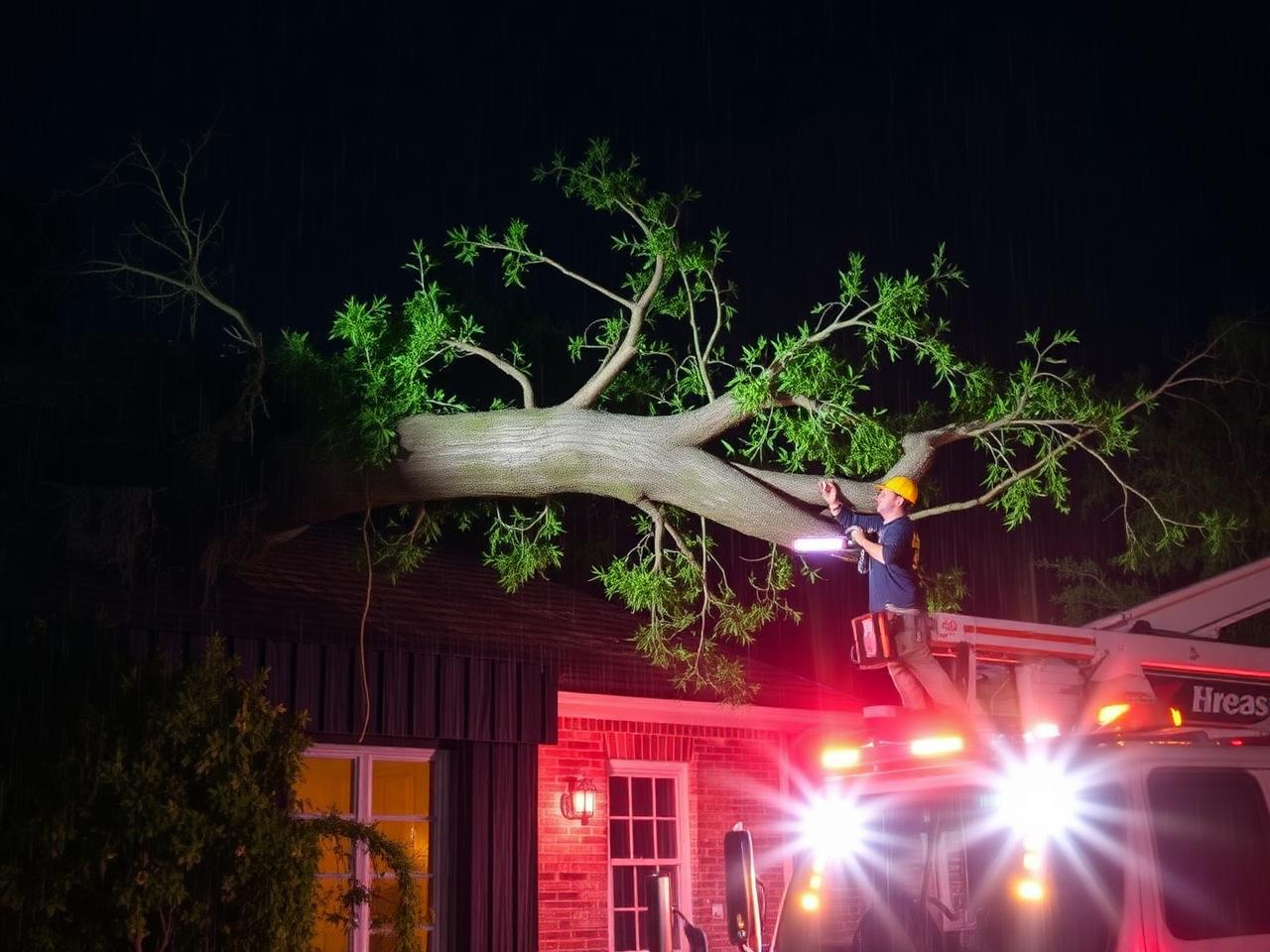
Right now
What to do if you have a fallen or leaning tree
When a storm brings down a tree it's stressful, but acting fast and safely makes all the difference. Here's what to do while our crew is on the way:
Stay away from the damage
Broken branches and leaning trees can shift without warning. Keep kids and pets well clear of the area.
Check for power lines
If the tree is touching or near power lines, do not move anything yourself. Call your utility company immediately.
Take photos
If it's safe to do so, snap a few pictures. Your insurance company will want proof of what happened.
Don't attempt DIY removal
Storm-damaged limbs are under tension. One wrong cut causes more damage, or a serious injury.
On arrival
What to expect when we get there
- Secure the site and assess hazards, lean, root movement and hanging limbs
- Coordinate with the utility company if lines are involved
- Protect roofs, siding, hardscapes and landscaping before any cutting
- Perform controlled removals using rigging, or a crane when required
- Haul away debris, grind stumps on request and tarp openings if needed
- Provide photos and an itemized invoice for your insurance claim
Our emergency response, every single time
Rapid dispatch and assessment
We prioritize roof impacts, blocked access and utility risks. A foreman assesses hazards, lean, root movement and safe rigging options on arrival.
Controlled removal, not guesswork
We stabilize the work zone, protect roofs, siding, paving, irrigation and lighting, then section the tree with rigging or a crane. Every load is lowered under control.
Tarping and temporary protection
If a limb penetrated the structure, we install temporary tarps or plywood after removal so you stay weather-tight until repairs.
Complete storm debris cleanup
Brush is chipped or loaded, logs cut and hauled, the site raked and blown clean. Prefer to keep the chips for your beds? Just say the word.
Documentation for insurance
Date-stamped photos, scope notes and an itemized invoice suited to claims. We'll speak with your adjuster about conditions and hazards if needed.
Follow-up services
Stump grinding and root-ball remediation the same visit or right after. If a damaged tree can be saved, we advise on pruning and cabling.
Emergencies we handle
Storm-damaged and split trees
North Texas species fail differently. Live oaks need controlled sectioning, cedar elms turn brittle after drought, and Bradford pears split at weak unions. We match the method to the species and the defect.
Trees on structures or vehicles
Roof strikes need ground protection, tie-in points above the load and steady lowers so shingles, gutters and coping stay intact. Vehicles are cleared without dragging limbs across paint or glass.
Trees near power lines
For service drops we trim and clear safely. For distribution lines we coordinate with the utility and only proceed once the scene is made safe.
Blocked roadways and driveways
Access is opened first so residents and emergency vehicles can move, then we finish the full property cleanup.
Know your property
Tree emergencies across DFW
North Texas weather turns fast, especially in spring and summer, when high winds, lightning and heavy rain roll through. Denton, Frisco, Plano and Grapevine regularly see trees uprooted and large limbs broken in storms.
Many DFW neighborhoods have older trees that weren't pruned regularly or were planted too close to homes and power lines. After a storm, especially with saturated soil, those trees are far more likely to fall.
Regular tree trimming is the cheapest storm insurance there is, and a hazardous tree is often better handled with a planned tree removal before the next front arrives.
Quick post-storm checklist
- Are any trees leaning more than they were before?
- Do you see cracks in the trunk or large hanging limbs?
- Are any roots exposed or visibly shifted?
Spot any of these? Call (469) 991-1728, an inspection now is far cheaper than an emergency later.
Where we work
24/7 response across North Texas
Plus every surrounding DFW community. Call (469) 991-1728 for immediate help, the phone is answered day and night.
Emergency tree service questions
If you have a fallen or hazardous tree in Denton or anywhere in the DFW Metroplex, call Quality Tree Service DFW at (469) 991-1728. We're available 24/7 for emergency tree removal and storm damage cleanup.
Tree down? We're already awake.
Storm damage, roof strikes and blocked driveways cleared 24/7 across Denton County and the DFW Metroplex.